

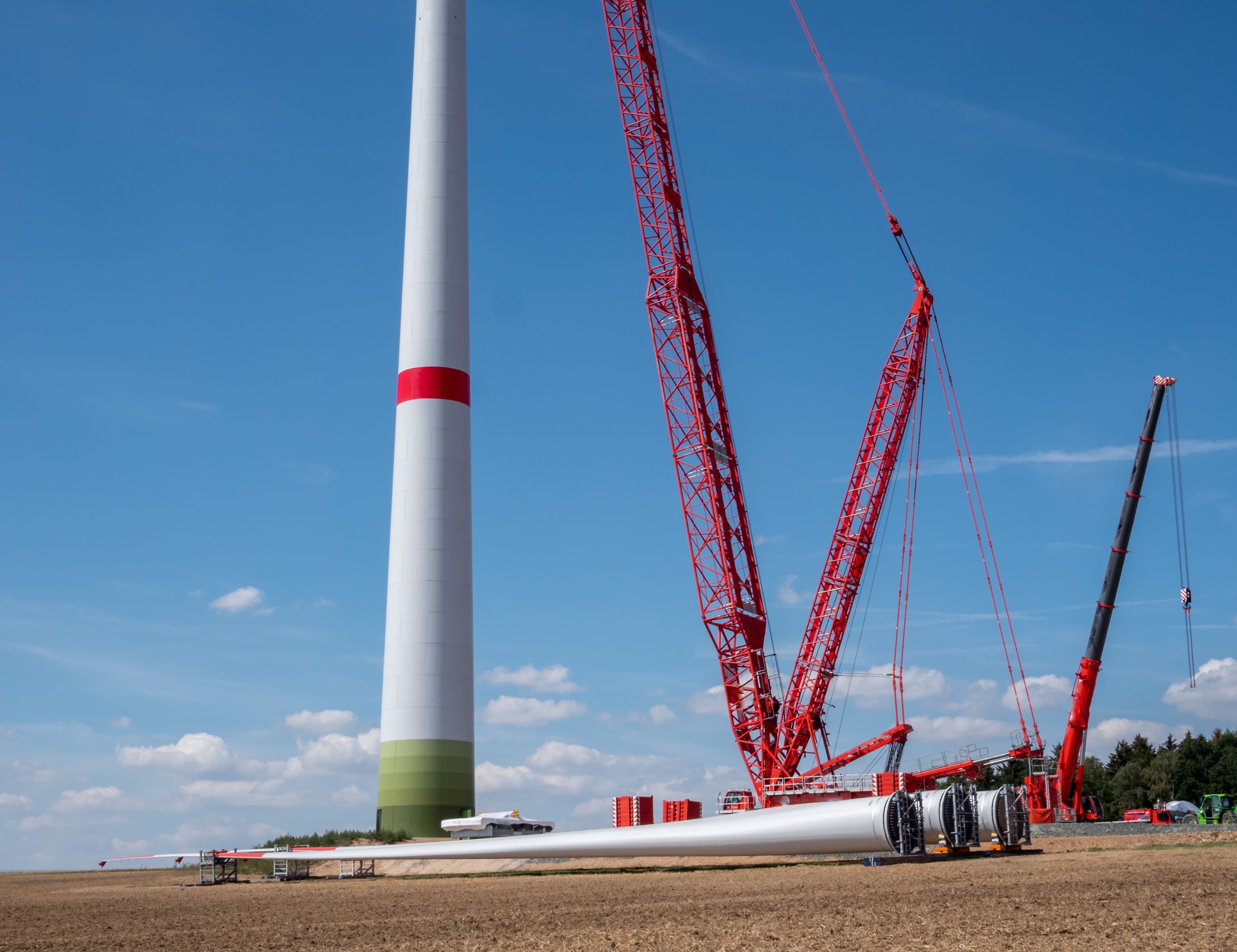
All-terrain and rough terrain cranes get confused with each other often, and the names alone don't do much to clear up the distinction. Both handle off-road and uneven ground conditions, but they solve genuinely different logistical problems, and understanding what actually separates these two categories helps buyers avoid choosing the wrong crane type based on a name that sounds similar to what they actually need.
All-terrain cranes are built to travel legally on public highways at standard road speeds while still offering genuine off-road capability once they reach a job site. This combination, highway-legal travel plus real rough-ground performance, is exactly what sets this category apart, since most other mobile crane types have to sacrifice one of these two capabilities to excel at the other. All-terrain cranes typically feature multiple steering axles, allowing tighter maneuverability on both highways and confined job sites, along with a chassis and suspension system engineered to handle both smooth pavement and uneven terrain without needing a separate configuration change between the two.
Rough terrain cranes prioritize off-road capability and job site maneuverability over highway travel, and they generally aren't rated for legal highway travel at all, requiring trailer transport between locations instead. This tradeoff makes sense for their intended use, since rough terrain cranes are built around large, off-road tires and a compact chassis optimized purely for job site conditions rather than needing to also perform well on a highway. A contractor choosing between these two categories needs to weigh how much of a project's total logistics actually depend on the crane traveling under its own power between distant locations versus needing pure off-road performance once it's already on site.
The all-terrain category earns its cost premium specifically on projects requiring frequent movement between job sites separated by real highway distance, where a crane that can drive itself between locations at standard road speed saves considerable time and trailer transport cost compared to a rough terrain crane needing separate hauling for every relocation. Contractors running multiple, geographically spread projects benefit most directly from this capability, since the cumulative time and cost savings across many relocations can meaningfully offset the higher upfront cost an all-terrain crane typically carries compared to a rough terrain equivalent with similar lifting capacity.
For contractors working primarily on a single site or a cluster of nearby locations where highway travel between jobs isn't a significant factor, a rough terrain crane's typically lower cost and purpose-built off-road performance often makes more practical sense than paying for all-terrain's highway capability that would rarely get used. Recognizing when highway mobility is a genuine operational need versus a feature that sounds useful but wouldn't actually get exercised regularly protects buyers from overpaying for capability their actual project pattern doesn't call for.
All-terrain cranes generally offer some of the highest lifting capacities available in the mobile crane market, often exceeding what comparable rough terrain models can achieve, reflecting their design for larger, more demanding projects where both mobility and substantial lifting capability matter simultaneously. This capacity range makes all-terrain cranes a common choice for major infrastructure and industrial projects requiring both significant lift capability and the flexibility to relocate between multiple project phases or sites over a project's duration.
The multiple steering axle configuration common on all-terrain cranes provides genuine maneuverability advantages beyond just highway travel, allowing tighter turning radius on congested urban job sites where space is limited despite the crane's substantial overall size. This maneuverability matters directly for projects in dense urban environments, where navigating a large crane into position within tight site constraints represents its own real operational challenge separate from the crane's lifting capability itself.
All-terrain cranes typically carry a higher purchase or rental cost than a comparable rough terrain model, reflecting the additional engineering required to deliver both highway and off-road performance in a single chassis. This cost difference needs to be weighed against actual project requirements rather than assumed as simply the more capable, and therefore automatically better, choice regardless of whether that added capability actually gets used. A contractor evaluating this decision should calculate the real transport savings an all-terrain crane's highway capability would deliver across their actual typical project pattern before assuming the premium is automatically justified.
Our guide on rough terrain cranes covers that category's specific strengths in more depth, worth reading directly alongside this comparison if you're still weighing which category fits your actual project pattern. Our broader overview of understanding the different types of cranes and their applications situates both all-terrain and rough terrain cranes within the full landscape of mobile crane categories, useful context if you're still narrowing down which type genuinely fits your business before diving into a specific purchase decision.
Given the mechanical complexity involved in a chassis designed to perform well in both highway and off-road conditions, used all-terrain cranes deserve particularly careful inspection of steering system components and suspension condition, since these systems see genuinely different stress patterns than a rough terrain crane's simpler, purpose-built off-road configuration experiences. Confirming maintenance history specific to these dual-purpose systems, not just general engine and hydraulic condition, protects buyers from inheriting a maintenance issue tied to this category's more complex mechanical design.
Operating an all-terrain crane effectively requires familiarity with both its highway driving characteristics and its off-road, job-site lifting configuration, a somewhat broader skill set than operating a rough terrain crane that only needs to perform well in one of these two modes. Confirming operator experience specifically with this dual-mode category, rather than assuming general crane operating experience transfers seamlessly, protects against a learning curve playing out on an active job site rather than during proper training beforehand.
Our guide on how to buy used cranes online safely covers general due diligence for used crane purchases, and all-terrain cranes present a somewhat more specialized used market than rough terrain equivalents, given their higher cost and the more specific buyer pool that actually needs highway travel capability alongside off-road performance. This narrower buyer pool can mean somewhat longer sale timelines for sellers and, for buyers, a genuine opportunity to find well-priced equipment if you're patient and willing to search across a wider geographic area than you might for a more commonly available rough terrain model.
Our article on digital marketplaces transforming crane buying and selling covers how online platforms have expanded the pool of buyers and sellers connecting for equipment transactions generally, and this expanded reach matters especially for a more specialized category like all-terrain cranes, where a purely regional or word-of-mouth search might turn up far fewer viable options than a genuinely national or even international marketplace search would surface.
The right choice between all-terrain and rough terrain ultimately comes down to being honest about how your business actually operates, project locations, typical relocation frequency, and how much genuine highway travel distance separates your typical job sites, rather than defaulting to whichever category sounds more capable or versatile in the abstract. A contractor who rarely moves equipment beyond a tight regional cluster of job sites gains little from all-terrain's highway speed capability, while an operation running projects across a wider geographic spread may find that same capability delivers real, measurable value across a year of typical operations.
All-terrain and rough terrain cranes solve genuinely different logistical problems despite both handling off-road job site conditions capably, and the real distinction comes down to highway travel capability and the cost premium that capability carries. Understanding your own project pattern, how often equipment actually needs to travel meaningful highway distance between sites versus staying within a tighter operational area, is what determines which category genuinely fits your business rather than assuming more capability is automatically the better investment regardless of whether you'd ever actually use it. Making this call based on real operational data, not just which crane sounds more impressive, protects your investment either way.
